Front desk teams and reservation staff answer the same questions hundreds of times a week: check in times, breakfast hours, parking fees, pet policies. This article walks through 10 practical hotel chatbot examples with realistic guest questions and sample AI responses, showing how a well-configured AI chatbot handles real conversations across the entire guest journey.
Key Takeaways
- This article provides 10 concrete AI hotel chatbot examples with illustrative guest dialogues covering pre-stay, arrival, in-stay, and post-stay guest communication.
- Hotel chatbots reduce repetitive guest questions at the front desk while improving guest engagement and personalized service, with chatbots able to reduce front desk inquiries by up to 40%.
- Every example demonstrates conversational context: follow-up questions, flexible phrasing, and multilingual exchanges that go beyond scripted FAQ responses.
- Hotel-specific content (website pages, policies, room descriptions) is the foundation for accurate answers, especially for city center hotels fielding constant questions about parking, transport, and local attractions.
- Lobbychat is a hotel-specific generative AI chatbot that uses each hotel’s own content and guides guests toward direct bookings without acting as a booking engine itself.
What This Article Covers (And Why It Matters Now)
Hotel guests expect answers fast. A guest comparing rates at 11 pm on a Tuesday will not wait until morning for someone to reply about cancellation terms or parking availability. Front desk teams are stretched thin; reservation staff juggle calls, emails, and chat messages simultaneously. According to industry survey data, 78% of hotel chains use AI systems as of 2025, yet only 7% of hotels operate with a comprehensive AI strategy. The result: hotels waste an estimated $2.3 billion annually on ineffective AI implementations, and 78% of hotel chatbot implementations fail to reduce staff workload. Chatbots that operate in isolation, without proper content or integration, increase staff workload by 30-40%.
This article gives you 10 realistic hotel chatbot use cases with sample dialogues. All conversations shown here are illustrative examples, not transcripts from real hotels. Real capabilities depend on the chatbot’s content sources and system connections. The focus is on guest communication: answering questions, guiding guests, and reducing repetitive tasks. Full workflow automation (payment processing, property management system updates, booking modifications) requires dedicated integrations and is noted where relevant.
AI chatbots can handle 80% of routine guest inquiries without human intervention. The goal across these examples is to show how that works in practice: reducing repetitive guest questions, supporting the entire guest journey from first website visit to checkout, and helping increase direct bookings by answering the doubts that otherwise send guests to OTAs.
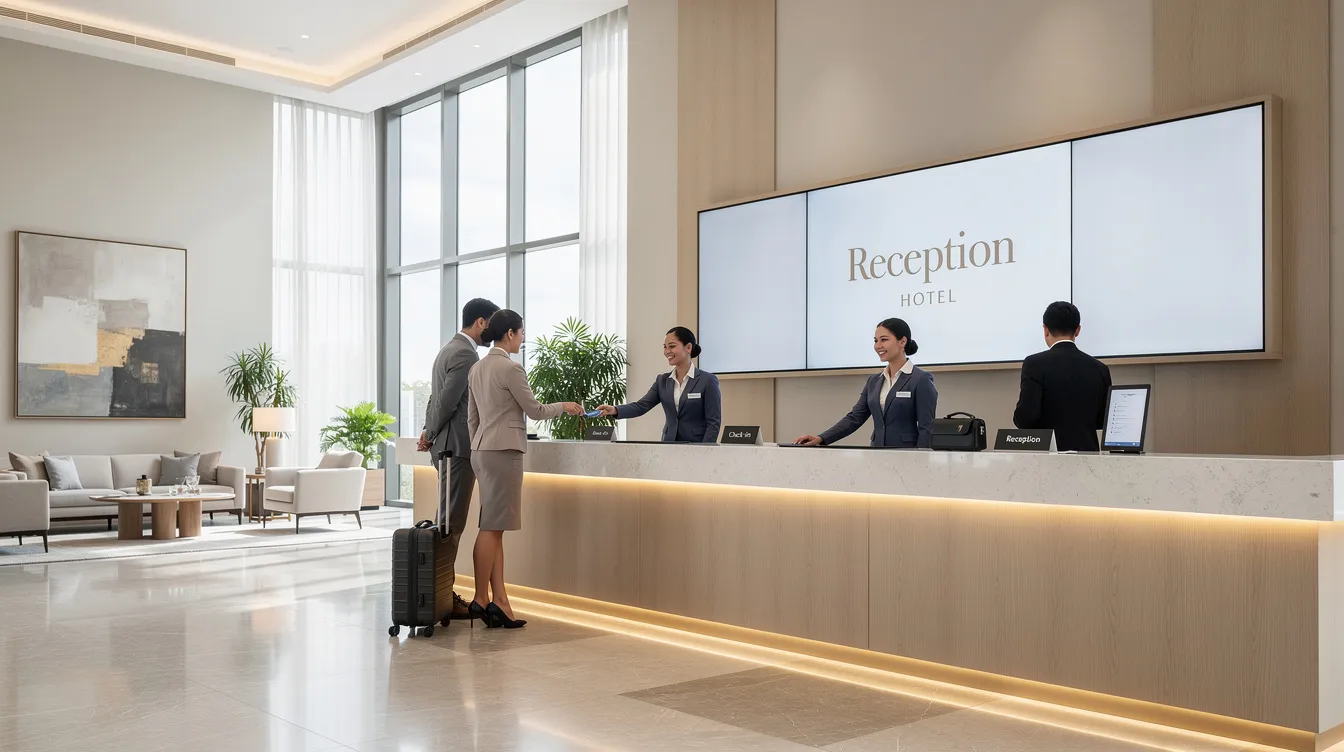
Rule-Based vs. AI Hotel Chatbots: Why Examples Matter
Rule-based chatbots follow predefined scripts for responses. A guest clicks “Check-in time” and gets a fixed answer. This works for predictable, single-turn questions. But rule-based chatbots are simpler and cost-effective but less flexible: if a guest types “what time can I get into my room?” instead of clicking a button, the bot may not match the intent.
AI chatbots use natural language processing for better understanding. They parse flexible phrasing, maintain conversation history across follow-up questions, and adapt tone. Hotel chatbots are AI powered virtual assistants for guest interactions before, during, and after stays. AI chatbots provide personalized assistance and learn from interactions when properly supervised. The 10 examples below demonstrate this conversational behavior, not rigid decision trees.
Strong AI does not replace desk staff. It filters routine queries so hotel teams can focus on complex requests and in person interactions that define genuine hospitality.
Example 1: Pre-Arrival Check-In and Arrival Details
Guests often inquire about check-in and check-out policies, room amenities, and parking details before arriving. Hotel chatbots provide instant, 24/7 automated responses to frequently asked questions like these, improving response times from 10 minutes to under 1 minute.
Guest: “What time is check-in on 15 August?” Bot: “Check-in begins at 3:00 pm. If you arrive earlier, you can drop your luggage at our storage area from 9:00 am, free of charge.”
Guest: “What if I arrive after midnight?” Bot: “Our reception desk is staffed until midnight. For arrivals after midnight, we send a secure key-box code to your email on the day of arrival. Would you like me to note your expected arrival time so the night team is prepared?”
The bot pulls these details from the hotel’s website and digital guest guide. If check in times change seasonally or a renovation closes the luggage room, that content must be updated immediately. Outdated arrival info creates confusion that lands right back on front desk staff.
Example 2: Breakfast Times, Options, and Dietary Needs
Breakfast questions flood city center hotels daily. Business guests want early options; families ask about weekend hours. Chatbots assist guests with dining availability, menus, and reservation services, drawing from the hotel’s own content. Hotel chatbots use knowledge bases and live property data to answer guest questions like these.
Guest: “Is breakfast included in my rate?” Bot: “Some of our rates include breakfast. You can check your booking confirmation for details. Our buffet runs 6:30-10:00 am on weekdays and 7:00-11:00 am on weekends.”
Guest: “Do you have gluten-free and vegan options?” Bot: “Yes. We offer fresh fruit, vegan tofu scramble, gluten-free bread, and plant-based muffins daily. For severe allergies, we ask guests to notify us at least 24 hours in advance so the kitchen can take cross-contamination precautions.”
Chatbots should not invent prices or claim requests are completed without confirmation from staff. If the chatbot is not connected to the reservation system, it should direct the guest to check their confirmation email or contact the team rather than guessing whether breakfast is included.
Example 3: Parking, EV Charging, and City Center Access
City center hotels get constant customer queries about parking, height restrictions, and navigating pedestrian zones. Effective hotel chatbots clarify choices and manage logistics safely. AI chatbots can provide curated responses using property-specific knowledge and quick action buttons.
Guest: “Do you have parking? How much per night?” Bot: “We have underground parking at €24 per night with a 1.9 m height limit. Reservation is recommended in summer. We also have 4 EV charging bays, billed per kWh through the ChargePoint app.”
Guest: “How do I get there from the central train station?” Bot: “Exit the station at the south entrance. Turn left onto Bahnhofstrasse, walk 400 metres, then turn right at the river bridge. The hotel entrance is 50 metres ahead on your left. Total walk: about 7 minutes. Here is a link to directions on our website.”
The bot relies on accurately maintained parking and transport pages. Before seasonal changes or city roadworks, hotel teams should review and update this content.
Example 4: Room Amenities and In-Room Features
“Is there a fridge?” “Do rooms have irons?” “Can I stream Netflix on the TV?” These are among the most common unanswered guest questions identified by Touch Stay’s analysis of over 37,000 conversations. Automated responses handle repetitive queries and aid guest bookings by resolving these doubts before a guest picks up the phone.
Guest: “Does the Superior room have a desk for working and USB charging by the bed?” Bot: “Yes. The Superior room includes a 120 cm writing desk with two power outlets and one USB-A port. There are also USB charging points on both sides of the bed. The room has a Nespresso machine, a mini-fridge, and a 50-inch smart TV with Chromecast for streaming.”
Guest: “What about the Standard room? Does it have a balcony?” Bot: “The Standard City View does not include a balcony. For a balcony, the Deluxe River View category is the closest option, which also adds a sofa and a larger safe (fits a 15-inch laptop).”
Guests can request extra amenities using chatbots, which automatically log requests in operations platforms, provided the chatbot is connected to the hotel’s service ticketing tool. These answers come from room fact sheets; if housekeeping removes minibars or upgrades TVs, the chatbot’s content source must reflect the change.
Example 5: Hotel Facilities, Pool, Gym, and Spa
Guests check pool hours, towel policies, and spa availability constantly, especially during holidays and weekends. Chatbots automate service requests and manage logistics during a guest’s stay. 70% of guests find chatbots helpful for simple requests like these.
Guest: “What are pool and gym hours tomorrow?” Bot: “The pool is open 7:00-21:00 daily. Children under 12 must be accompanied by an adult at all times. The gym is accessible 24/7 with your keycard. Towels are provided poolside.”
Guest: “Can you book a 60-minute massage for Saturday at 5 pm?” Bot: “I can share our full spa treatment menu and link you to the online booking form. Alternatively, you can call the spa directly at extension 340. I’m not able to confirm appointments from here unless the spa booking system is connected.”
This distinction matters. Answering facility questions is different from executing operational transactions like creating a spa booking. The chatbot should be transparent about what it can and cannot do.
Example 6: Pet Policies and Family Stays
Pet-friendly and family policies often drive the booking process. 58% of guests believe AI can improve their stay, and clear policy answers before booking build the confidence that converts browsers into guests. 61% of consumers are willing to spend more for personalized experiences, making detailed, tailored responses valuable.
Guest: “Are dogs allowed? What’s the fee?” Bot: “Dogs are welcome. The fee is €15 per dog per night, with a maximum of two dogs per room and a 25 kg weight limit per dog. Dogs are allowed in guest rooms and the lobby but not in the restaurant or pool area. A €50 refundable deposit applies.”
Guest: “Great. We’re also traveling with a baby. Do you have cots?” Bot: “Yes. Baby cots are available free of charge, subject to availability. I’d recommend requesting one at least 48 hours before arrival. Connecting rooms are available in the Family category, but I’m not able to guarantee a specific room assignment here; the reservations team can confirm availability for your dates.”
The bot can explain policies and typical room capacities. Promising specific room assignments or guaranteeing interconnecting rooms requires a link to the reservation system and inventory rules.
Example 7: Transport, Airport Transfers, and Local Area Tips
City center hotels receive constant guest inquiries about airport transfers, public transport, and walking distance to local attractions. Chatbots recognize when a guest needs human assistance and can escalate issues promptly if a question falls outside available information.
Guest: “How do I get from the airport to the hotel after 10 pm?” Bot: “Two options: a taxi from the airport rank costs approximately €35-45 and takes 25 minutes at that hour. The S-Bahn line S1 runs until 11:45 pm; take it to Hauptbahnhof (20 minutes), then walk 7 minutes to the hotel. After midnight, only taxis or ride-hailing apps are available.”
Guest: “Any restaurant recommendations near the hotel open late?” Bot: “Trattoria Roma on Altstadt Gasse (3-minute walk) serves until midnight on weekends. For something quicker, Bäckerei Müller across the street has a late-night counter until 1 am. Both are guest favourites.”
Hotel-specific content from “Location” or “How to find us” pages, combined with curated local recommendations, powers more trustworthy answers than generic city advice. Personalized recommendations like these improve guest experience and guest engagement.
Example 8: Multilingual Guest Communication in One Conversation
Survey data from h2c shows 82% of hoteliers consider multilingual support essential. AI hotel chatbots handle multiple languages within a single conversation without requiring the guest to switch tools or start over.
Guest: “What time is breakfast?” Bot: “Breakfast is served from 6:30 to 10:00 am on weekdays and 7:00 to 11:00 am on weekends.”
Guest: “Perfecto. ¿Pueden darme indicaciones para llegar al hotel desde la estación central?” Bot: “Por supuesto. Salga por la salida sur de la estación. Gire a la izquierda por Bahnhofstrasse, camine 400 metros y gire a la derecha en el puente del río. La entrada del hotel está 50 metros adelante, a su izquierda. Unos 7 minutos a pie.”
The bot detects the language switch and responds in Spanish with the same concrete details. Hotels should still test translations for sensitive topics (safety instructions, payment policies) and use guest feedback to refine multilingual content over time across multiple channels.
Example 9: Special Requests, Accessibility, and Personalization
Guests use chat to ask for accessible rooms, allergy-friendly bedding, high floors, and late check-out. These are guest preferences that shape the entire stay. Integrating chatbots with property management systems improves response accuracy for these requests.
Guest: “I need an accessible room with a step-free shower, grab bars, and near the elevator. I also have a feather allergy.” Bot: “We have four accessible rooms on the ground floor, each within 10 metres of the elevator. They include step-free rain showers with fold-down seats and grab bars. Door width is 90 cm. For feather allergies, we provide hypoallergenic pillows and duvets. I’ll add your allergy note to your reservation so housekeeping can prepare the room.”
Guest: “Can you guarantee a quiet room on a high floor?” Bot: “I’ve recorded your preference for a high floor and quiet location. Our team reviews these requests during room assignment, but I’m not able to guarantee a specific room number. If this is especially important, I’d suggest calling reservations directly so they can discuss available options for your dates.”
The difference between capturing a request and confirming it matters for guest trust. Transparent wording protects both the guest and the hotel. Service requests like these flow through to the right staff member when the chatbot is connected to an internal task system.
Example 10: Direct Bookings Support Without Overpromising
AI hotel chatbots can support a hotel’s direct booking strategy by answering pre-booking questions about room types, cancellation policies, amenities, and booking benefits. By addressing these questions in real time and guiding guests to the hotel’s booking engine, chatbots can help reduce uncertainty during the booking decision process.
Guest: “What’s the best rate for 20-22 November? Is cancellation flexible if I book direct?” Bot: “Our best available rate for those dates is shown on our booking page. Direct bookings include free cancellation up to 48 hours before arrival, complimentary late check-out until 1:00 pm (subject to availability), and a welcome drink at the bar. Here’s a link to our booking engine with your dates pre-filled.”
Guest: “Can you complete the booking for me here?” Bot: “I can guide you step by step through the booking process and answer any questions along the way. The actual payment and confirmation happen through our secure booking engine, which handles card details safely.”
Proactive, accurate pre-booking support reduces abandonment and supports the hotel’s strategy to increase direct bookings over booking platforms and OTAs. The chatbot is an information and guidance layer, not a transactional system, unless connected to booking engines that support that function.
How Hotel-Specific Content Makes Chatbots Actually Useful
Even the best AI produces unreliable answers without hotel-specific information. Room descriptions, breakfast menus, parking details, accessibility specifications, floor plans, and curated local tips form the knowledge base that powers every example above. Key content sources include website pages, digital compendiums, PDF fact sheets with room specifications, and internal FAQs compiled from front desk teams.
For hotels considering implementing conversational AI, understanding how chatbots work is only the beginning. Our Hotel Chatbot Ultimate Guide explores the key considerations, from selecting the right solution and preparing hotel-specific content to implementation and ongoing optimisation.
Only 23% of hotel guests report satisfaction with AI chatbot interactions. The gap between expectation and reality often traces back to outdated or missing content. Touch Stay’s analysis of over 37,000 guest conversations found that 15.2% of guest questions returned no answer because the hotel’s content simply didn’t cover them. The most common gaps: WiFi details, cancellation policies, hairdryers, irons, and heating controls.
A simple content maintenance routine closes these gaps: assign content owners by department, review seasonal details quarterly (pool hours, restaurant schedules, holiday rates), update after renovations or policy changes, and test with real guest questions before publishing. When the chatbot hits a recurring “I don’t know” moment, that topic belongs in the next content update.
Implementing an AI Hotel Chatbot in Your Property
Start with clear goals. Most many hotels begin with three: reduce front desk workload, support reservations and direct bookings, and capture guest feedback. AI chatbots can handle 80% of routine guest inquiries automatically, but only if the content behind them is complete.
Steps at a high level:
- List the 20-30 questions your front desk and reservations teams answer daily.
- Organize your hotel content (website, policies, room specs) into a clean knowledge base.
- Choose channels: website widget, WhatsApp, or web app across multiple channels.
- Define escalation rules: complaints, payment issues, safety concerns, and more complex requests go to a staff member.
- Have front desk teams, reservations, and sales test the chatbot with typical guest conversations before going live.
The difference between an information-only chatbot and one connected to existing systems (property management system, CRM, service ticketing) is substantial. Set realistic expectations based on what is currently integrated. Launch is not the finish line. Monitor transcripts, gather staff input, adjust answers, and expand scenarios gradually. 58% of guests believe AI can improve their stay; delivering on that belief requires ongoing attention.

Where Lobbychat Fits: A Hotel-Specific Generative AI Chatbot
Lobbychat is a hotel-specific generative AI chatbot built for the hospitality industry. It understands natural-language guest questions, maintains conversational context across follow-ups, and uses the hotel’s own website and content as its primary knowledge source. It is not a generic FAQ tool or a basic rule-based bot.
Lobbychat supports multilingual guest communication across the entire guest journey, helping international hotel guests get accurate answers at any hour. It guides guests toward the hotel’s existing booking engine for direct bookings rather than processing payments or storing card details itself.
Setup does not require internal AI expertise. The Lobbychat team handles initial onboarding: connecting the right content, configuring escalation paths, and testing responses so the first version already covers the most common guest questions. Hotels that want to evaluate these chatbot use cases at their property can start with Lobbychat’s six-month free trial.
Maintaining Accuracy and Guest Trust Over Time
Reliable answers are the foundation of guest satisfaction with any chatbot. The hotel chatbot examples in this article only work in practice if information stays correct.
Build a maintenance rhythm: scheduled reviews of check in times, breakfast details, parking fees, facilities hours, and cancellation policies. Ad-hoc updates after any change, whether a pool renovation, a new breakfast vendor, or a revised pet policy. When the chatbot encounters an ambiguous question, it should admit uncertainty, suggest where to find the answer, or escalate to human assistance rather than guessing.
Guest feedback and front desk observations highlight gaps. If desk staff keep correcting a specific answer, that content needs updating in the chatbot’s knowledge sources. Modern AI chatbots do not automatically “learn from every conversation” in a live environment; hotels must control updates to maintain compliance, safety, and brand tone.
Conclusion: Using Conversational AI to Support, Not Replace, Hospitality
These 10 hotel chatbot examples cover the scenarios hotel teams encounter daily: arrivals, breakfast, parking, room amenities, facilities, pet policies, transport, multilingual guests, special requests, and direct booking support. The pattern across all of them is the same: give the guest a clear, specific answer in seconds, and free staff from repetitive tasks so they can focus on the service quality and in person interactions that define a smoother guest experience.
Success depends on accurate hotel information, ongoing content maintenance, and clear boundaries between answering questions and completing transactions. Major hotel brands have already moved in this direction; Marriott’s Bonvoy app offers personalized booking experiences, Accorbot notifies guests about discounts and promotions, and Four Seasons Chat provides concierge services via its app. Hotels of any size can apply the same principles with the right hotel chatbot solutions.
If your front desk teams spend hours each day on repetitive guest questions, an AI hotel chatbot can absorb that load. Lobbychat offers a six-month free trial, so you can test these use cases at your property with no upfront cost and see the results before committing.
FAQs About Hotel Chatbot Examples and Use Cases
These FAQs cover practical questions not fully addressed above. Exact capabilities depend on each hotel’s systems and chosen chatbot configuration.
Can a hotel chatbot fully replace my front desk team?
No. Hotel chatbots handle repetitive guest questions and simple service requests. Complex, emotional, or exceptional situations still require human judgment, empathy, and operational authority. The best hotel chatbots filter and prioritize guest inquiries, freeing staff to focus on in-person hospitality and problem-solving. The goal is higher guest satisfaction through faster answers to routine questions, not fewer people at the front desk.
What hotel information do I need before launching a chatbot?
Start with check-in and check-out times, breakfast details, parking info, room amenities lists, pet and family policies, facilities and opening hours, cancellation rules, and basic transport directions. Build from the questions front desk teams and reservations staff hear daily, then expand to local recommendations and special offers. Having this content well-organized on your website or in digital documents makes setup faster and results more accurate.
Can an AI hotel chatbot handle bookings and take payments?
An AI chatbot can explain rate types, room categories, and policies and guide guests to the hotel’s secure booking engine. Confirming live availability, modifying hotel bookings, or taking payments directly is only possible if the chatbot is integrated with systems that support those functions. By default, treat the chatbot as an information and guidance layer for the booking process, not a full transactional system.
How does a chatbot know when to hand a conversation to a human?
Well-configured chatbots for hotels use rules and intent detection to escalate. Triggers include expressions of dissatisfaction, refund requests, safety concerns, or questions outside available information. The chatbot passes conversation history and guest data to the staff member so guests do not repeat themselves. Hotels should define escalation rules in advance and test them with real scenarios.
How quickly can a hotel realistically go live with an AI chatbot?
The time required to launch an AI hotel chatbot depends on the solution and how much setup the hotel needs to handle.
Some platforms require hotels to configure the chatbot, prepare training content, and test responses themselves. This can take several days or longer, depending on the complexity of the setup.
Lobbychat takes a different approach. Instead of asking hotels to build and train their own chatbot, the Lobbychat team handles the initial setup using information from the hotel’s existing website.
A personalised AI chatbot can typically be prepared within 24 hours, ready for the hotel to review and test. Once approved, the hotel simply adds a small code snippet to its website to activate the chatbot.
This approach significantly reduces the technical work required from hotel staff, making it easier to introduce AI-powered guest assistance without a lengthy implementation process.